A deep corner cabinet can hold far more than it seems, yet it often turns into a dark storage tunnel. Pots disappear. Lids lean sideways. Expired ingredients wait behind newer purchases. Learning How to organize a deep kitchen corner cabinet begins with access, not capacity.
The National Kitchen & Bath Association’s 2024 Kitchen Trends Report identifies practical storage as a continuing kitchen priority. Houzz’s 2024 U.S. Kitchen Trends Study also reports that 76% of renovating homeowners upgraded their cabinets. These findings suggest a clear expectation: storage should support daily movement, not simply add volume. Mary Jo Peterson, CKD, a respected kitchen designer and storage specialist, expresses the principle this way: “Storage should make the next action easier, not merely hide more things.” Her advice fits corner cabinets especially well. A sliding tray can bring a heavy Dutch oven forward. A low turntable can keep oils visible. A narrow bin can prevent packets from collapsing into a back corner.
Measure first. Check the door swing, shelf height, and the cabinet’s deepest point. Then remove everything and group items by use. Keep frequently used cookware near the opening. Store occasional appliances farther back, but only when they remain reachable. No stretching.
Still, a perfect system may be unrealistic. Cabinet hardware costs money, and some awkward corners remain awkward. That matters. A useful plan should survive rushed breakfasts, wet hands, and imperfect habits. This guide explores flexible solutions for 2026, while recognizing that organization is not a one-time achievement. It is a small adjustment repeated often.
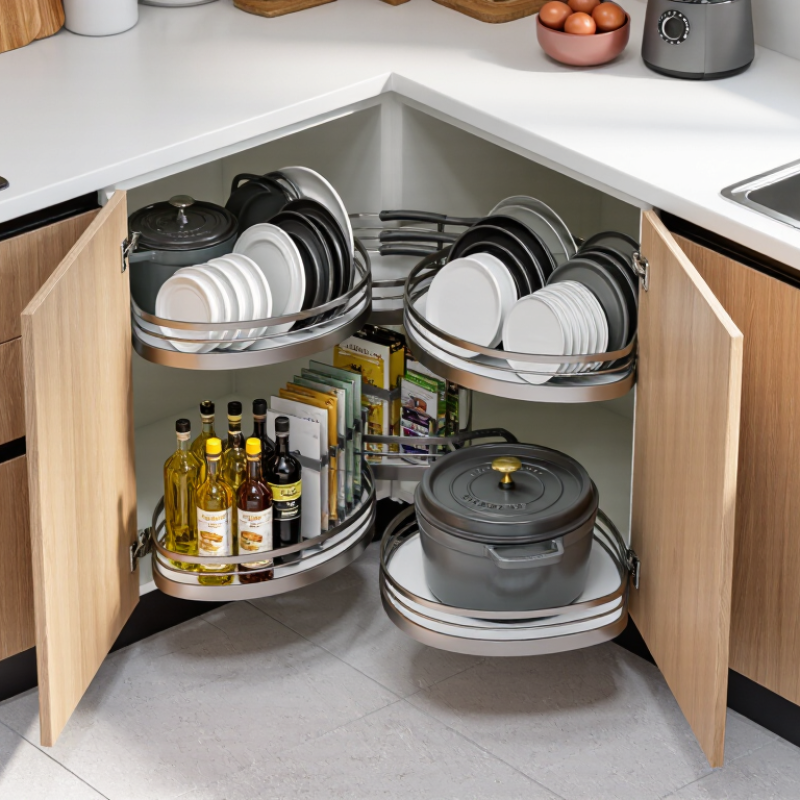
A deep kitchen corner cabinet often looks generous, but its storage capacity is difficult to use. The opening may be narrow, while the interior extends far beyond comfortable reach. Pots, baking dishes, and spare appliances can slide into a dark rear zone. Out of sight. Poor lighting makes the problem worse, especially when shelves create visual barriers. Before choosing organizers, measure the opening, depth, height, and nearby door clearance. These details determine whether a pull-out shelf, rotating tray, or simple bins will work safely.
Weight distribution matters more than many homeowners expect. Heavy cookware belongs low and near the front, where lifting feels controlled. Small containers should not fill the entire entrance. Leave a clear hand-width path for reaching deeper items. Grouping by frequency also reduces unnecessary bending. Keep daily pans closest, and move seasonal serving pieces farther back. A professional installer would also check hinges, shelf supports, and wall irregularities. A few millimeters can change the fit.
I learned this after placing tall containers in a corner cabinet. They blocked the light and forced me to remove three items for one jar. The arrangement looked neat, but it failed in daily use. That mistake still matters. Visibility matters. Deep storage needs stable access and honest limits on cabinet capacity. Some unused space may be better than a strained reach or a fallen stack.
In 2026, deep kitchen corner cabinets need more than extra storage. They need controlled movement and clear visibility. After organizing several awkward corners, I found that the wrong organizer creates a second hidden cabinet. Measure the opening, interior depth, and hinge clearance before buying anything. A narrow pull-out shelf often works better than a wide tray that catches on the frame. Leave about two inches around moving parts when possible. Small gaps matter.
Choose organizers according to what you store. A rotating shelf suits jars, sauces, and small containers. It keeps every item within reach, but tall bottles may wobble during rotation. For cookware, use a two-level pull-out system with a reinforced base. Store heavier pans below. The cabinet should not feel overloaded. Soft-close hardware is useful, yet it does not fix poor weight distribution. Test the organizer with empty hands first, then add items gradually. This simple check can reveal scraping, tilting, or blocked doors.
Use low-sided bins for loose packets and cleaning cloths. Transparent or open-front containers make forgotten items easier to notice. Label only broad categories, because overly specific labels become annoying. I once divided one cabinet into too many sections. It looked precise, but daily use became slower. Leave one small area flexible. Kitchens change. Every few months, remove expired supplies and inspect screws, runners, and shelf edges. A practical system may look less perfect, but it should make the back corner feel reachable.
Choose organizers that match standard base-cabinet dimensions while preserving clearance for doors, shelves, and the toe-kick.
Planning guide: A typical base cabinet box is about 24 inches deep and 34.5 inches high before the countertop is installed. A 25.5-inch countertop depth and a 4.5-inch toe-kick are common reference dimensions. Measure the actual corner cabinet before purchasing a pull-out, lazy Susan, drawer system, or adjustable shelf.
A deep corner cabinet becomes useful when every item has a clear reason to be there. The 2024 Houzz U.S. Kitchen Trends Study reports that 76% of renovating homeowners upgrade their cabinets, showing how strongly storage affects kitchen planning. Group items by frequency, size, and function before buying organizers. Keep daily plates, pans, and mixing bowls near the opening. Store seasonal servingware farther inside.
Tip: Use a three-zone layout. Place everyday items in front, weekly items in the middle, and rarely used pieces at the back. Add a shallow turntable for sauces or small tools. Use sturdy bins for tall bottles and awkward appliances. Labels help, but oversized labels can waste space.
Size matters in a deep corner. Stack small containers together, then separate large cookware with vertical dividers. Keep heavy items low to reduce lifting strain. The National Kitchen & Bath Association’s kitchen planning guidance consistently emphasizes accessible storage and efficient work zones. That principle works here, although my own system is not perfect. A rarely used roasting pan still migrates forward. That is useful feedback.
Tip: Review the cabinet every three months. Remove duplicates, measure wasted gaps, and adjust the zones. Do not force every item into a container. Sometimes an empty section improves access more than maximum capacity.
2026 Top Tips for Organizing a Deep Kitchen Corner Cabinet
A deep kitchen corner cabinet should not become a dark storage tunnel. Start by measuring its depth, opening width, and hinge clearance. The Houzz 2024 U.S. Kitchen Trends Study reports that 76% of homeowners upgraded cabinets during renovations. That demand makes internal planning more important. Install two adjustable shelves when possible. Leave 12 to 15 inches between levels for bowls, cookware, and small appliances. A shelf that fits everything may still waste space.
Use low-sided bins for snacks, cleaning cloths, or rarely used baking tools. Choose bins with sturdy handles. Label the front edges. Keep daily-use items near the opening. For heavy pots, install a full-extension pull-out with a suitable load rating. Check the hardware instructions before loading it. Do not guess. The NKBA 2024 Kitchen Trends Report identifies storage and organization as continuing priorities in kitchen design.
A lazy Susan works well for sauces, jars, and compact cookware. Select a model that leaves clearance from the cabinet frame. Test its rotation before fixing the shelves permanently. I would not force every inch to work; that often creates clutter. A common mistake is placing tall bins beside a rotating tray. They collide quietly, then become frustrating. Use cardboard mock-ups first. Recheck the arrangement after one week. Daily movement reveals problems that measurements miss. (Sources: Houzz 2024 U.S. Kitchen Trends Study; NKBA 2024 Kitchen Trends Report)
2026 Top Tips for Organizing a Deep Kitchen Corner Cabinet
A deep corner cabinet needs regular reviews, not a one-time makeover. Every four weeks, remove everything and place items on the counter. Check expiry dates, damaged packaging, and duplicate cookware. The USDA estimates that 30–40% of the U.S. food supply is wasted, so forgotten ingredients deserve attention. Group daily-use items near the opening. Store heavy appliances on the lowest shelf. Use shallow bins, labels, and a small rotating tray to prevent hidden items. Keep a clear hand’s-width pathway when possible.
Set a seasonal review for bulky tools, serving dishes, and holiday equipment. The U.S. Environmental Protection Agency identifies food waste as a major component of municipal solid waste, making better visibility a practical household habit. Record what you actually use. I once kept a large roasting pan for years, although it blocked smaller pans and rarely left the cabinet. That was poor planning. Still, not every unused item needs immediate removal. Sentimental or occasional pieces can stay in one clearly marked section. Review that section again after three months. If an item remains untouched, reconsider its space. A simple checklist near the cabinet door helps maintain consistency, especially after rushed grocery trips or family gatherings.
| Organization Dimension | Common Challenge | Recommended Method | Suitable Items | Placement Guidance | Review Frequency | Priority |
|---|---|---|---|---|---|---|
| Access and visibility | Items stored at the back are difficult to reach and may be forgotten. | Use a full-extension pull-out shelf or a rotating corner organizer that matches the cabinet dimensions. | Pots, pans, mixing bowls, and frequently used cookware | Keep the most-used items in the front half or on the easiest-access shelf. | Monthly | High |
| Category separation | Different types of cookware become mixed together. | Assign one clearly defined zone to each category and use shelf dividers where appropriate. | Lids, bakeware, cookware, serving dishes, and small appliances | Store similar items together and avoid creating more categories than the cabinet can support. | Every 1–2 months | High |
| Vertical capacity | Usable vertical space is lost when items are stacked without structure. | Add stable shelf risers or adjustable shelves, leaving enough clearance for safe removal. | Plates, shallow bowls, trays, and small containers | Place heavier items on lower shelves and keep stacks low enough to lift safely. | Quarterly | Medium |
| Lid management | Loose lids slide behind cookware and create clutter. | Store lids vertically in a divided rack or in a dedicated section beside the matching cookware. | Pan lids, pot lids, food-container lids, and baking-pan covers | Arrange lids by size and keep the most frequently used sizes near the cabinet opening. | Monthly | High |
| Weight distribution | Overloaded shelves can become difficult to pull out or may be unsafe. | Place heavy items low and distribute weight evenly across shelves or organizers. | Cast-iron cookware, large pots, appliances, and stoneware | Check the organizer’s stated load limit before storing heavy cookware. | Every 3 months | High |
| Unused-item control | Rarely used or duplicate items occupy valuable deep storage space. | Remove duplicates, damaged items, and objects that have not been used during the review period. | Duplicate utensils, excess bakeware, unused gadgets, and chipped dishes | Move occasional-use items to a less accessible area only after confirming they are still needed. | Every 6 months | Medium |
| Food and container storage | Unmatched containers and expired foods can accumulate in hidden areas. | Nest containers by size and store matching lids together in a separate, visible section. | Food-storage containers, dry goods, and sealed pantry supplies | Use airtight containers for suitable dry goods and keep food away from cleaning products. | Monthly | High |
| Cleaning and hygiene | Dust, crumbs, and spills are harder to notice in a deep corner. | Use removable shelf liners and wipe the cabinet from back to front during each review. | All cabinet zones, especially food-storage areas | Allow shelves and liners to dry fully before returning items. | Every 2–3 months or after spills | High |
| Labeling and inventory | Household members may return items to the wrong location. | Use simple labels for broad categories and maintain a short list of items stored in the deepest area. | Bulk supplies, seasonal cookware, and specialty tools | Place labels at eye level or on the front edge of pull-out shelves. | Every 3 months | Low |
| Safety and condition checks | Damaged hinges, loose hardware, or unstable organizers can create hazards. | Inspect cabinet hardware, shelf supports, sharp edges, and organizer movement during each review. | Pull-out shelves, rotating organizers, shelf risers, and stored cookware | Repair or remove unstable equipment before reorganizing the cabinet. | Every 6 months and after installation changes | High |
Measure the opening width, interior depth, and hinge clearance. Leave about two inches around moving parts when possible.
A lazy Susan keeps small jars and sauces within reach. Check that it clears the cabinet frame, and watch for tall bottles that may wobble.
Use a full-extension pull-out with a suitable load rating and reinforced base. Store heavier pans on the lower level.
About 12 to 15 inches can fit bowls, cookware, and small appliances. Adjust the spacing to match what you actually store.
Use low-sided bins with sturdy handles. Keep daily-use items near the opening, and use broad labels on the front.
Make cardboard mock-ups and test the organizer’s movement. Add items gradually, then look for scraping, tilting, or doors that get blocked.
They may collide with the tray as it turns. Leave room for movement; forcing every inch into use can create clutter.
Recheck it after a week of regular use, then every few months. Remove expired supplies and inspect screws, runners, and shelf edges.
No. They can make movement gentler, but they do not correct poor weight distribution. Test the system before adding heavy items.
Organizing a deep kitchen corner cabinet begins with understanding its challenges, including limited visibility, awkward reach, and wasted space. This guide explains How to organize a deep kitchen corner cabinet by first evaluating its depth, shelf height, and the items currently stored inside. It then recommends choosing practical organizers, such as adjustable shelves, bins, lazy Susans, and pull-out storage, to make every area easier to access.
For a more efficient layout, group kitchen items according to frequency of use, size, and function. Keep everyday cookware and supplies near the front, while seasonal or rarely used items can be placed farther back or higher up. Arrange shelves and organizers so that containers remain visible and easy to remove without disturbing other items. Finally, maintain the cabinet with regular reviews, removing unused products, correcting misplaced items, and adjusting the layout as storage needs change.

Arico Home